Dirt Isn't Spread Evenly
A thin, even film of dust costs you some output, and rain or a routine cleaning takes care of it. The bigger risk is uneven dirt: a patch of bird waste, a clump of leaves, or a patch of caked pollen. Those block light from one small part of a panel completely.
That matters because of how panels are built. Each panel is a grid of cells wired together, so one blocked cell affects the cells around it.
What a Hot Spot Is
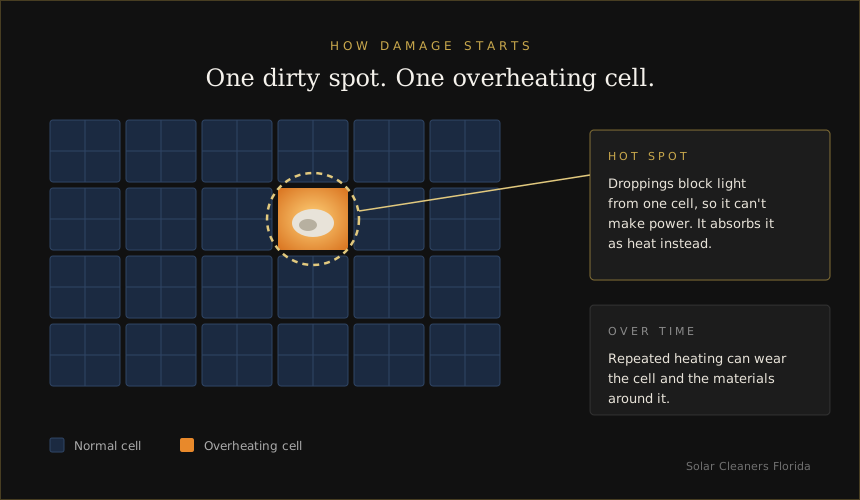
Cells in a panel are wired in series, a bit like water moving through a pipe. When one cell is shaded, it can't produce its share, but the current from the healthy cells still has to pass through it. That cell ends up absorbing power and turning it into heat. This is called a hot spot.
Panels include bypass diodes that limit the problem, but they don't eliminate it. Repeated heating is hard on the cell and the materials around it. Over the years that can mean discolored material, weaker output from the affected cells and, in severe cases, visible burn marks. How much damage happens depends on the panel, how often the shading occurs and how long it sits.
Buildup That Gets Harder to Remove

Florida adds its own challenges. Salt air, pollen and the minerals left behind by evaporating rain and sprinkler water all settle on the glass. In the sun they bond to the surface. Fresh grime rinses off easily. Old, baked-on deposits don't.
That creates a second problem: removing them the wrong way. Abrasive pads, harsh chemicals or high-pressure spray can scratch the panel's anti-reflective coating, and that is damage no one can undo. It's one reason we don't recommend aggressive DIY cleaning. Our DIY vs. professional guide covers the trade-offs.
Salt and Moisture
Coastal air also speeds up corrosion on metal parts such as frames, clamps and connectors over time. Rinsing salt off regularly helps protect them. See why coastal Florida panels need extra care.
The Output Loss Is Real Too
Dirt also costs you production, and the loss varies with the type of buildup, your system and the weather. We cover the numbers in how much energy dirty panels lose. Lost output is easy to measure. Slow wear is easy to miss, which is why it deserves attention.
How to Protect Your Panels
- Clean on a schedule with pure water and gentle methods, not abrasives or harsh chemicals
- Deal with residue quickly before the sun bakes it on
- Trim overhanging branches that drop leaves, sap and attract birds
- Leave roof work to professionals. A fall is a bigger risk than any dirt
Not sure how often your home needs it? See our Sarasota cleaning schedule.
Want it done for you? See how we handle solar panel cleaning with purified water and no pressure washing on panels.